
How long does it take to get cited in ChatGPT and why is your competitor already there?
You publish the article. Share it with your team. Check ChatGPT.
Nothing.
A few days later, you try again. Your competitor appears, complete with a link. Your brand is still missing.
The question practically writes itself: how long should this take?
There is useful research on citation timelines. But before turning a benchmark into a deadline, there is another question to ask:
Will this page get cited at all?
The citation clock tells only part of the story
A Searchable analysis shared by Emilia Möller followed more than 4,000 new articles for 60 days.
Among articles each engine cited during that window, the median time to first citation was 3.5 days for ChatGPT and 9.5 days for Claude.
Yet only 19% of the full sample received a citation from either engine.
That distinction matters. The speed figures describe the cited group. They do not promise that every new article will appear within a few days.

P90 marks the point by which 90% of each engine’s observed first citations had occurred. These are sample findings, not universal service levels or guaranteed timelines.
For a marketing team, the practical implication is to investigate both speed and coverage. A quick citation is encouraging. It tells you little about the pages that remain absent.
Publishing a page does not reserve its place in an answer
OpenAI explains that ChatGPT Search can rewrite a question into targeted searches and run further searches after reviewing results. Search placement depends on multiple factors intended to surface relevant, reliable information; inclusion is not guaranteed.
A publication date is therefore a starting point for observation.
It is not a booking confirmation for an AI answer.
At Brand To Bytes, we recommend asking a more useful question alongside “How long has this page been live?”
What decision does this page help a potential customer make?
If the answer is vague, waiting longer may leave the content problem untouched.
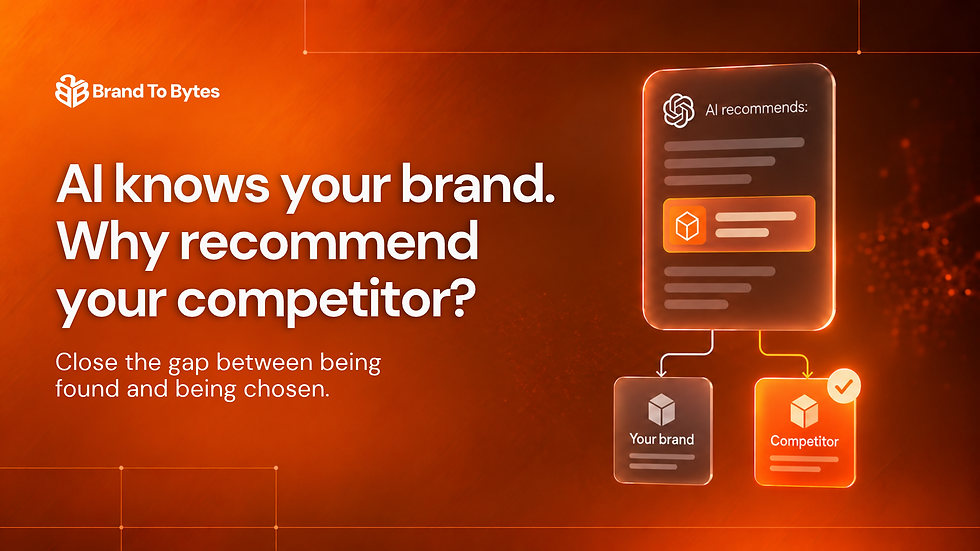
Why your competitor may be appearing
AirPulse’s guide highlights the importance of pages that address the buyer’s task and recommends inspecting sources cited in competitor answers. It also separates brand mentions from website citations.
Use that as an investigation prompt rather than a complete explanation of how an answer was selected.
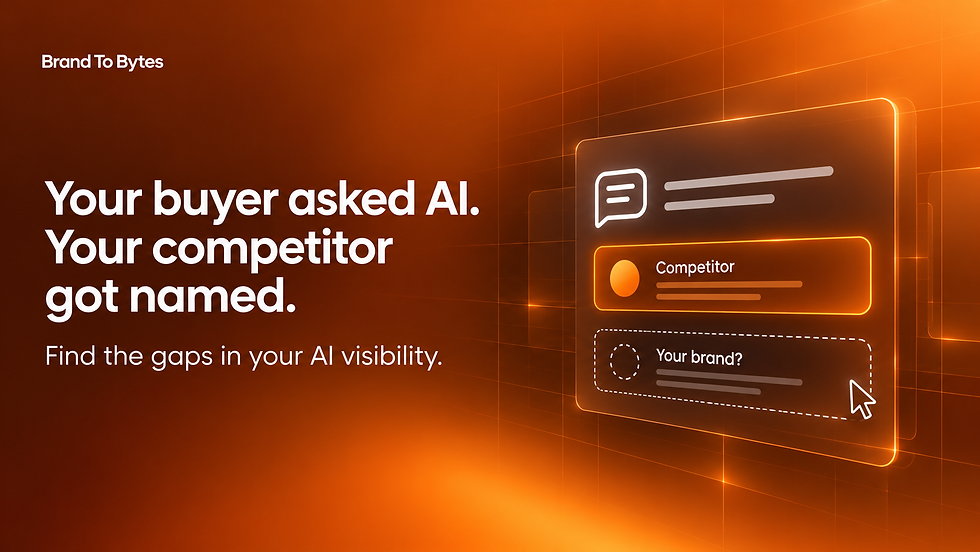
Imagine a buyer asking:
“Which agency can help our B2B startup improve AI visibility?”
Your homepage might introduce a broad range of marketing services. A competing page might explain its AI visibility process, intended audience, reporting approach and limitations.
Our recommendation is to examine whether your own page gives the buyer enough information to evaluate you.
That review may reveal a content gap. It does not prove that one headline, format or paragraph caused the competitor’s appearance.
Separate four outcomes in your reporting
“AI visibility” becomes difficult to interpret when several outcomes are combined.
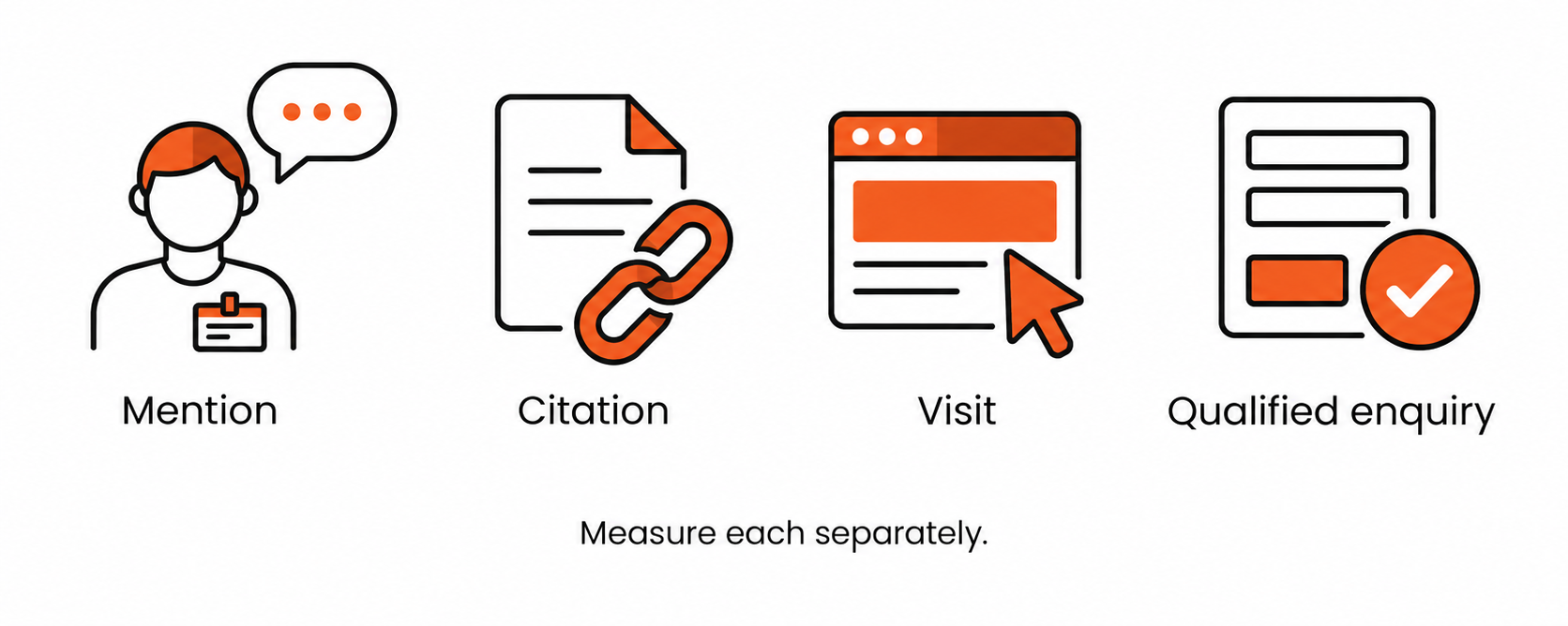
Track these separately:
Mention: Your brand appears in the answer.
Citation: A source is linked; record whether it is your website.
Visit: Someone arrives on your website.
Qualified enquiry: Someone takes a commercially relevant next step.
A citation can support awareness without generating a visit. A visit can happen without an enquiry. A mention is not necessarily a recommendation.
For your team, the useful question is what each observation helps you decide.
Diagnose the gap before producing more content
When a competitor appears repeatedly, our suggested review covers three areas.
1. Access
Can the relevant search systems reach your important pages?
OpenAI says sites should allow OAI-Searchbot and ensure their hosting or content delivery network permits its published searchbot IP addresses to be eligible for inclusion. Access alone does not guarantee placement.
Have your technical team check this independently from the copy review.
2. Explanation
Does the page explain the service in terms a buyer can use?
Review who it serves, which problem it addresses, how the work happens and what someone should expect.
Replace broad claims with specifics wherever you have evidence to support them.
For example, “We deliver growth” offers little to evaluate. Explaining how you investigate enquiry quality, agree qualification criteria and review campaign changes gives a prospect something concrete.
3. Evidence
Can someone examine the basis for your claims?
A useful case study should explain the starting situation, your contribution, the measured outcome and any important limitations.
Look for missing context before adding stronger language. Credibility depends on what you can substantiate.
Use the next 30 days to learn something useful
A month is a reasonable planning window for organised work. It should not be sold as a guaranteed citation deadline.
Here is a practical Brand To Bytes review plan.
Week 1: Establish a baseline
Choose a small set of questions that reflect actual buying decisions. Save the exact prompts, dates, search settings, answers and cited URLs.
Keep the questions commercially relevant rather than choosing only prompts that already favour your brand.
Week 2: Check access and competing sources
Review technical access to priority pages. Open the sources linked in relevant answers and examine what information they provide.
Document what you can observe. Keep possible explanations separate from confirmed findings.
Week 3: Make a focused improvement
Choose a specific weakness you can address.
That might be an unclear service explanation, an unsupported claim or a missing example. Record the change and its publication date.
Avoid changing everything at once if your aim is to learn which work deserves further investment.
Week 4: Review the evidence
Repeat the prompt set under comparable conditions. Look at mentions, citations and on-site outcomes separately.
Decide whether to continue, refine the page or investigate another constraint.

Make the report useful for the next decision
AirPulse recommends repeated prompt checks instead of relying on one screenshot.
Our advice is to bring that discipline into your reporting.
A useful update might explain which buyer questions you tested, what changed, which pages appeared and what remains uncertain.
A first citation can be a milestone. Repeated relevant citations, useful website visits and qualified conversations answer different business questions.
Report the progress you can demonstrate without turning it into a promise about future results.
Give your content a clearer reason to exist
At Brand To Bytes, we approach AEO and GEO through clear positioning, useful content, technical access and consistent measurement.
The work begins with your audience: what are they trying to understand, compare or choose?
Build around that decision. Support your explanation with evidence. Review what happens after publication.
The goal is to make the next improvement clearer—not simply to keep watching the calendar.
Want to understand where your brand is being missed? Connect with Brand To Bytes to discuss your AI visibility priorities.

Comments